THE SOCIAL LIFE OF SMALL URBAN SPACES
by Wm. H. Whyte
I LOVE this video. It is dated, but so worth checking out. While some of the places may have changed, I am not sure the behavior has changed.
http://vimeo.com/21556697
Monday, November 21, 2011


Wednesday, November 16, 2011
Dredging for PCBs in Hudson River
Saw this in my local paper this morning and thought I would share!
http://www.poughkeepsiejournal.com/article/20111116/NEWS01/311160027/Heart-disease-tie-PCBs-feared?odyssey=tab|topnews|text|PoughkeepsieJournal.com
http://www.poughkeepsiejournal.com/article/20111116/NEWS01/311160027/Heart-disease-tie-PCBs-feared?odyssey=tab|topnews|text|PoughkeepsieJournal.com
Thursday, November 10, 2011

Wednesday, November 9, 2011
QUEENS BOTANICAL GARDENS
 |
| From the Green Roof... |
 |
| Auditorium Space |
 |
| Overlooking the Garden |
 |
| Hmm... |
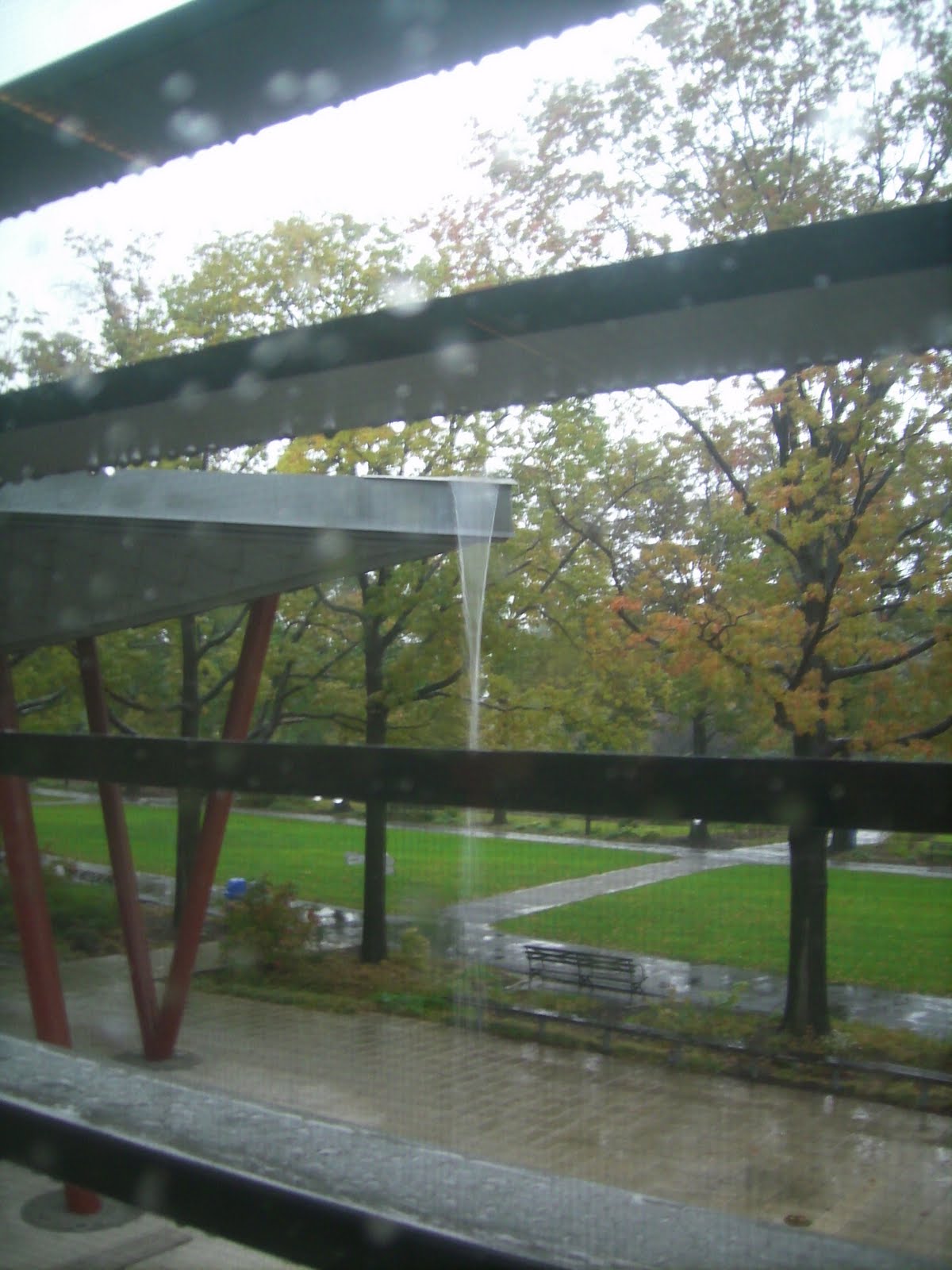 |
| Lucky that we had a Rainy Day so we can see how they Capture the Rainwater! |
 |
| A Handsome Group of People Just Trying to Save the Planet! |
AND...
CHECK OUT THIS LINK TO MY WEB ALBUM CONTAINING MORE PHOTOS FROM OUR SEMINAR FIELD TRIP TO THE QUEENS BOTANICAL GARDENS...
https://picasaweb.google.com/114817259749697586086/FITSIE1011FieldTripQBG?authkey=Gv1sRgCP-3jLOxhIuJ5gE
Monday, November 7, 2011
Celebration, Florida
I came across this info a few years back which talks of the evolution of Celebration from Walt Disney's own mind, and its interesting connection to EPCOT.
Here is Celebrations official website...
(Note the designers of some of Downtown Celebrations buildings!)
What the Mortgage Brokers say...
http://www.floridamortgageblogger.com/orange-county-mortgage/celebration-florida-mortgage/
Here are some photos of mine from the 4+ years my brother and his family spent living in Celebration...
 |
| My Brother's First House in Celebration |
 | |
| The House on Indigo Drive decorated for Christmas |
 |
| On the Front Porch |
 |
| The Celebration Pumpkin Patch |
 |
| Downtown Celebration...They make it "Snow" at Christmas Time!" |


 |
| The Lake at Celebration |
 |
| Swimming in one of Celebration's MANY Pools |
MORE TO FOLLOW....
Sunday, November 6, 2011
Guernica / Michael Mehaffy and Nikos A. Salingaros: The Architect Has No Clothes
This is an interesting article that Nora sent me to look at with regards to my Term Paper...I thought it was cool enough to share...
Guernica / Michael Mehaffy and Nikos A. Salingaros: The Architect Has No Clothes
Guernica / Michael Mehaffy and Nikos A. Salingaros: The Architect Has No Clothes
Monday, October 24, 2011
Personal Glossary
I am sure you are not at all interested in my Personal Glossary, as you all have your own, but I have posted a whole mess of terms under that tab, tho it is surely still a work in progress!
Check it out if you dare...
Shannon
Check it out if you dare...
Shannon
Saturday, October 22, 2011
Module 3 Abs-Part III
Gertner, Jon. "Why Isn't the Brain Green." The New
York Times, November 11, 2001.
In this article by Mr. Jon Gertner, we begin to see how
something that seems such an obvious concern, like the current state of our
global environment, specifically climate change, can get pushed somewhat to the
"back burner" amongst the many worries and many issues facing us
today. The "decisions" we
make, both as groups and as individuals, have a profound effect on what kind of
"support" we lend to a cause. The
heart of this piece lies in what Columbia University chair Elke Weber states
which is that "climate change is anthropogenic....caused
by human behavior." Weber deduces
that if it is "caused by human behavior, then the solution probably lies
in changing human behavior," and this may start in how we process this
problem.
- Risk processing is looked at: Analytic system involves careful consideration of cost and benefits; often undervaluing future outcomes; less likely to change our lifestyle. "Risk as a feeling" system urgent reaction to danger; usually based on personal experience therefore underestimating things by which we have no experience in.
- Weber surmises that we may have a "finite pool of worry," meaning we can only worry about too many problems at one time, or we react with "single action bias," meaning we stop at doing one thing to make us feel as if we have moved to solve the problem in some way.
- CRED (Center for Research on the Epidemiology of Disasters) studies presented in this article, state that our reaction to such problems vary based on whether or not we make our decisions as individuals or in a group, if we do both, and in what order we do this (e.g..do we prepare individually prior to group work?)
- Collaborating more helps us to make decisions, but it is also shown that we tend to lose sight of the subject we are considering and the group effort becomes more about the method we are using to assess the problem.
- Frames are defined as a more "sophisticated nudge" whereby research takes advantage of our own cognitive biases in hopes it will resonate, whereas nudges are more gentle and more broad, moving us in a way so that we do not make mistakes but still arrive at the desired response.
The closed group studies done in Columbia University labs
remind me of the Kwok and Rajkovich piece where they talk about static systems
not being the most reliable model. I was
happy to see Gertner challenge that the studies at Columbia should be
questioned based not just on the fact that they were "closed" but
based on who did them, how they were financed, and who participated.
Framing and nudging are interesting tactics, as we need to
recognize that we cannot talk to every person the same way. We all come to the table with our own biases,
our own upbringing and background, our own experiences, therefore, we do not
hear things the same way or process them with the same mechanisms.
On the other hand, by framing these problems and real life
atrocities against our environment, are we somehow watering it down and in
effect accepting that people only really care about what affects them directly
the most? Shouldn't the negative effect
we are having on the environment speak volumes for itself? In America, we tend to think about climate
change as a distant problem and wait until we "feel" threatened to
react. It is only when it is in our own
backyard that we are forced to face it, so why bother changing until that
happens. But if framing, or the
alternative, achieve the same goal of awareness, responsibility, and motivation
for change, does it really matter so long as the result is positive.
Heshong, Lisa. "Delight" and "Affection"
in Thermal Delight in Architecture,
18-49. Cambridge: MIT Press, 1979.
In these two chapters by Heshong, the author visits the idea
of our thermal sense and the fact
that thermal information "always reflects what is directly happening to
the body," and our system is more apt to noticing change than it is aware
of a steady state, yet these steady states are the norm in the built
environment.
The thermal sense has
a profound effect on us physically, emotionally, and psychologically, and is
the sense that we cannot escape the experience of, unlike other senses and
forms the background for everything we experience. It makes a place more or less desirable, and
creates the opportunity for us to gather and share with each other.
Even with the evidence that people take delight in extremes,
the opposite extreme is often closely available, therefore creating balance and
a sort of steady state. Co-existence of
such extremes, Heshong suggests, also helps us to appreciate each more and
satisfy our need for contrast in our environments.
The other senses are important to our experience of space
and place as well (as evidenced by the pieces by Owen and Bull and Back) and
are also pre-cursors to our thermal experience, often indicating what is to
come and can make us more aware of thermal processes. Other senses also can evoke a feeling of
thermal change; for instance, the taste of mint cooling us.
Thermal sensory experiences, since always with us, create
strong memory connections and symbolism (e.g..the hearth is the center of the
home, or the Japanese bath as a gathering space) particularly with space and
the built environment.
- Heshong states "each sense contributes to the fuller comprehension of other sensory information," but if this is true, what if we are without use of a particular sense? Will the others compensate so we can still have the full experience?
- Heshong also presents that we are our own source of heat. This was also brought up in the Kwok and Rajkovich piece. In terms of sustainability, maybe it is possible to harness such thermal energy as a means to reduce our impact on the environment.
- As designers and decorators, this is where we may be able to have our greatest impact as we look to create more sustainable spaces. By understanding the sensory connections people have with their space and the ritualism they foster, particularly with the thermal sense, and people's need to have more control over their environment (as we have seen in the pieces by Chabon and Monaghan) we can look at patterns of activity, time of day, and the like, and create systems that are more efficient but still provide the desired feeling of space.
I really enjoyed this piece and am excited to further
explore the thermal sense as more of a jumping off point for me to explore
design approaches to sustainability.
Alison G. Kwok and
Nicholas B. Rajkovich. "Addressing
Climate Change in Comfort Standards." Building
and Environment 45 (2010): 18-22.
In this article, the authors
offer an alternative approach to the response to climate change that uses both mitigative (regarding efforts toward
reducing the accumulation of greenhouse gases in the atmosphere) and adaptive (our adjusting to the impacts
of a warming world through enhancing our ecosystem's resilience) measures which
focus on our HVAC (Heating, Ventilation,
and Air Conditioning) systems and our own human physiology, specifically, our
human comfort.
- Kwok and Rajkovich define the two differing philosophies of thermal comfort as: static model: uses data from climate chamber studies to support its theory (says Fanger) and adaptive model: uses data from the field studies of people in buildings (derived from work of Humphries and Nicol, Dear and Brager)
and surmise that people are
indeed more tolerant of thermal changes than the static model
suggests. They, therefore, feel that we,
as designers, need to look at the active
capacity, which is our ability to adjust and cope with the system, and
possibly have more control over it. This
ability to make adjustments is called adaptive
opportunity. This, in turn, could
help us to help us to conserve energy and help buildings to adapt to climate
change.
- The mesocomfort zone is a term coined by the authors to represent the area between we are currently with the "optimum" conditions of the static zone and a place where adaptive measures are taken on the boundary where our bodies begin to respond involuntarily and physiologically to the thermal conditions.
Further research on this
mesocomfort zone through study of people's expectations of their environment
(and how much discomfort we are willing to accept), their memories of past
experience in the space, and how much thermal control they are afforded, the
authors feel, could change our energy usage in the long run.
The authors speak rather broadly
of these interior environments and our opportunity for so-called control over
them. While it is public space,
particularly work environments, that they seem to be focused on, variables,
such as layouts of space (large open office pools made up of cubicles vs.
individual enclosed office patterns) and demographic of employees (age, race,
culture) are not mentioned. These can
have a major impact on the "control" over the thermal quality of the
environment. Is it really feasible to
expect you will accommodate most, or all when it comes to human comfort. What about new construction vs. existing
building reuse and the limitations that this may pose?
Even when one looks at
anthropometrical data, as we have seen in Panero and Zelnik previously, there
are ranges in what we design to be ergonomically effective. You cannot make everyone happy, though
flexibility is key. Kwok and Rajkovich
may indeed be onto something, but as they said, these conditions are not yet
researched fully.
With this also needs to come a
certain knowledge for the users who should be informed of the choice they are
being granted, and better yet a range of adjustability, not the power to adjust
the system to its extreme heat, extreme cold variables. When is it better just to put on a sweater?
It would have been interesting,
also, for the authors to raise the correlation between productivity in the
workplace as both a social and economic by- product of this move to reduce our
energy consumption. There are studies
that show that people who are physiologically comfortable will produce more, a
benefit to the employee him/herself and to the company bottom line.
Finally, the transient spaces
that were mentioned in the article made me think about extremes. Often on a hot day, it is a huge "relief"
to enter a fantastically cold lobby of a building, but can this really be
healthy. to experience such a shift?
Might the authors be onto something when they bring up these spaces, and
the possibility that we use them as more of a transition space so that we can
ease into the thermal environment instead of being hit in the face with the
severe change.
Friday, October 21, 2011

Monday, October 17, 2011

Subscribe to:
Posts (Atom)