This is the Surgical Hospital in Alexandria, Louisiana that I mentioned in our Week One Chem Discussion Thread: Check out some of the pics if you have a moment! Here is the link:
Sunday, January 8, 2012


Thursday, January 5, 2012
The Buckminster Fuller Challenge
Happy New Year 2012 to all!
Thought this was relevant and interesting to share...
http://challenge.bfi.org/
Thought this was relevant and interesting to share...
http://challenge.bfi.org/
Saturday, December 3, 2011
More Celebration...
These images give you a pretty good feel of this town...
 |
| A typical block...check out the "features!" |
 |
| Downtown |
 |
| Signage says it all! |
 | |
| A slice of Americana |
 |
| The Condos along Celebration Ave. |
 |
| Check out the Marketing! |
Module 6...My thoughts...
First, in the Jensen piece, indeed a very harsh "manifesto" of sorts,
we are reminded very sarcastically that "non-humans" don't matter when
it comes to our desire for progress. Certainly, this is what we have
discussed at length in Artie's class this semester. There was also
mention of polar bears and what immediately came to mind was the photo
of one sitting atop of a tiny piece of ice which Artie so effectively
included in one of this PP presentations.
But I found myself jarred by Jensen's vocabulary and the use of words like "dismemberment" and "cult". His suggestion that path of the Jews towards the Final Solution is a strong example of progress and his further classification of progress as is a drug, an addiction were particular harsh and very hard to move forward from with any sense of hope or positive feeling with regards to human beings then and now. Indeed the Nazis, and Hitler specifically, had a very sick sense of, and a total disregard for, life and humanity to say the very, very least, but to call that Progress? Well, I suppose my first reaction to the word is more on the side of positive. I took a minute to look up the word in a dictionary (actually not in a physical dictionary, as we have progressed toward "dictionary.com") and surprisingly, I found the definition to be rather "Jensen-esque." See for yourself here: dictionary.reference.com/browse/progress
Regardless of the truth that this definition and the Jensen piece provides, I would prefer to have them with a drop of optimism. Is it possible to acknowledge past transgressions, decisions, and overt wrongs with regards to our treatment of the environment, and human beings and proceed more carefully and thoughtfully toward a more sustainable world? Is this not progress?
The Schellenberger & Nordhaus piece was equally tough. The Venice scenario was an interesting example that they provided and one I was not really aware of.
Once again, themes from our classes with Artie were sprinkled throughout, such as mention of deforestation, overfishing, and Global Warming (specifically "Human Impact". The authors also pointed to the Industrial Revolution and post WWII as prominent dates in the history of our thinking and relationships towards resources, modernity, and materialism. These were also mentions in Artie's class.
Discussion of greenwashing in order for us to "express" our "higher moral status" reminded me of many a discussion with Grazyna this semester.
As an aside, I also could not help but think that with the mention of the development of our more "modern hands" and opposable thumbs, such were better adapted for tool use...more specifically to TEXT! :)
On The S & N piece in Orion Magazine, there were alot of terms being thrown around such as "knowledge economy", "ecotheology" and "modernization theology." I found myself tripping over these terms and thoughts, but the overall message and the modern day parallel of Occupy Wall Street and even the religious comparisons were quite compelling. It is like sitting in church and having the priest go on and on about the folks who are not coming to church on Sundays! Hello...I am here...they are not...talk to me!!!
Indeed we have the higher echelon of thought and commerce in our society feeding this fear based frenzy of "doom and gloom" scenarios while jetting off to one of their 4 homes around the world or outsourcing goods and services to poor countries instead of challenging our home base. None of it makes any sense and indeed is wildly hypocritical!
The article goes on and on, placing all blame and disregard for all "non-humans" square on our shoulders. It is hard to dispute all of this, but again, were is the hope? To say that "in attempting to solve these problems, we will inevitably create new ones" is pretty harsh and defeatist. I suppose this exemplifies how severe and huge these problems are, but that makes me feel more bad about trying to do things less bad.
I read "The Architect Has No Clothes" by Nora's suggestion prior to her having assigned it. I found it to be a fascinating look at how we all see things differently, but to qualify that with some science restores a bit more faith in me. It reminded me of the Gayle Epp piece and the MIT study, and how you had 4 different people looking at a project, and where the professional od design almost seemed the least clued in!
More reference to the Industrial Revolution, and an alternative perception of what other effects it has had on us and society since rather than the typical positive raves it received when I was in school was a theme yet again. It is interesting to see its significance be explored under the filter of sustainability and design today.
I do, however, feel that the authors were a little hard on Corbusier and Mies Van der Rohe and the whole Modernist movement. It seems an over simplification to say that they stood dramatically apart from context almost for the sake of being different. Was it not this architectural movement that spurred on the invention of such modern marvels as the elevator and bridges?
Maybe it is because I am a designer that I do not fall into the clutches of the "emperor's new clothes" as I do not have a problem questioning architects and their ignorance when it comes to total design. I look around me and where I live and I see a lack of imagination, a lack of research, and a lack of thought for humanity when I think of the monstrosities they dub "McMansions." I see the failure of a planned community, or "mini-urban center" that was fairly recently built in my community without much thought to the environment, the people or to the economy. Certainly aesthetics were not considered as well. But are we missing the boat and trying to capture this idea of community and neighborhood when that is not really what people want nowadays? I look at Celebration, Florida as I mentioned in class and I do not see a person or a child outside walking or playing.
But I found myself jarred by Jensen's vocabulary and the use of words like "dismemberment" and "cult". His suggestion that path of the Jews towards the Final Solution is a strong example of progress and his further classification of progress as is a drug, an addiction were particular harsh and very hard to move forward from with any sense of hope or positive feeling with regards to human beings then and now. Indeed the Nazis, and Hitler specifically, had a very sick sense of, and a total disregard for, life and humanity to say the very, very least, but to call that Progress? Well, I suppose my first reaction to the word is more on the side of positive. I took a minute to look up the word in a dictionary (actually not in a physical dictionary, as we have progressed toward "dictionary.com") and surprisingly, I found the definition to be rather "Jensen-esque." See for yourself here: dictionary.reference.com/browse/progress
Regardless of the truth that this definition and the Jensen piece provides, I would prefer to have them with a drop of optimism. Is it possible to acknowledge past transgressions, decisions, and overt wrongs with regards to our treatment of the environment, and human beings and proceed more carefully and thoughtfully toward a more sustainable world? Is this not progress?
The Schellenberger & Nordhaus piece was equally tough. The Venice scenario was an interesting example that they provided and one I was not really aware of.
Once again, themes from our classes with Artie were sprinkled throughout, such as mention of deforestation, overfishing, and Global Warming (specifically "Human Impact". The authors also pointed to the Industrial Revolution and post WWII as prominent dates in the history of our thinking and relationships towards resources, modernity, and materialism. These were also mentions in Artie's class.
Discussion of greenwashing in order for us to "express" our "higher moral status" reminded me of many a discussion with Grazyna this semester.
As an aside, I also could not help but think that with the mention of the development of our more "modern hands" and opposable thumbs, such were better adapted for tool use...more specifically to TEXT! :)
On The S & N piece in Orion Magazine, there were alot of terms being thrown around such as "knowledge economy", "ecotheology" and "modernization theology." I found myself tripping over these terms and thoughts, but the overall message and the modern day parallel of Occupy Wall Street and even the religious comparisons were quite compelling. It is like sitting in church and having the priest go on and on about the folks who are not coming to church on Sundays! Hello...I am here...they are not...talk to me!!!
Indeed we have the higher echelon of thought and commerce in our society feeding this fear based frenzy of "doom and gloom" scenarios while jetting off to one of their 4 homes around the world or outsourcing goods and services to poor countries instead of challenging our home base. None of it makes any sense and indeed is wildly hypocritical!
The article goes on and on, placing all blame and disregard for all "non-humans" square on our shoulders. It is hard to dispute all of this, but again, were is the hope? To say that "in attempting to solve these problems, we will inevitably create new ones" is pretty harsh and defeatist. I suppose this exemplifies how severe and huge these problems are, but that makes me feel more bad about trying to do things less bad.
I read "The Architect Has No Clothes" by Nora's suggestion prior to her having assigned it. I found it to be a fascinating look at how we all see things differently, but to qualify that with some science restores a bit more faith in me. It reminded me of the Gayle Epp piece and the MIT study, and how you had 4 different people looking at a project, and where the professional od design almost seemed the least clued in!
More reference to the Industrial Revolution, and an alternative perception of what other effects it has had on us and society since rather than the typical positive raves it received when I was in school was a theme yet again. It is interesting to see its significance be explored under the filter of sustainability and design today.
I do, however, feel that the authors were a little hard on Corbusier and Mies Van der Rohe and the whole Modernist movement. It seems an over simplification to say that they stood dramatically apart from context almost for the sake of being different. Was it not this architectural movement that spurred on the invention of such modern marvels as the elevator and bridges?
Maybe it is because I am a designer that I do not fall into the clutches of the "emperor's new clothes" as I do not have a problem questioning architects and their ignorance when it comes to total design. I look around me and where I live and I see a lack of imagination, a lack of research, and a lack of thought for humanity when I think of the monstrosities they dub "McMansions." I see the failure of a planned community, or "mini-urban center" that was fairly recently built in my community without much thought to the environment, the people or to the economy. Certainly aesthetics were not considered as well. But are we missing the boat and trying to capture this idea of community and neighborhood when that is not really what people want nowadays? I look at Celebration, Florida as I mentioned in class and I do not see a person or a child outside walking or playing.
Monday, November 21, 2011
THE SOCIAL LIFE OF SMALL URBAN SPACES
by Wm. H. Whyte
I LOVE this video. It is dated, but so worth checking out. While some of the places may have changed, I am not sure the behavior has changed.
http://vimeo.com/21556697
by Wm. H. Whyte
I LOVE this video. It is dated, but so worth checking out. While some of the places may have changed, I am not sure the behavior has changed.
http://vimeo.com/21556697
Wednesday, November 16, 2011
Dredging for PCBs in Hudson River
Saw this in my local paper this morning and thought I would share!
http://www.poughkeepsiejournal.com/article/20111116/NEWS01/311160027/Heart-disease-tie-PCBs-feared?odyssey=tab|topnews|text|PoughkeepsieJournal.com
http://www.poughkeepsiejournal.com/article/20111116/NEWS01/311160027/Heart-disease-tie-PCBs-feared?odyssey=tab|topnews|text|PoughkeepsieJournal.com
Thursday, November 10, 2011

Wednesday, November 9, 2011
QUEENS BOTANICAL GARDENS
 |
| From the Green Roof... |
 |
| Auditorium Space |
 |
| Overlooking the Garden |
 |
| Hmm... |
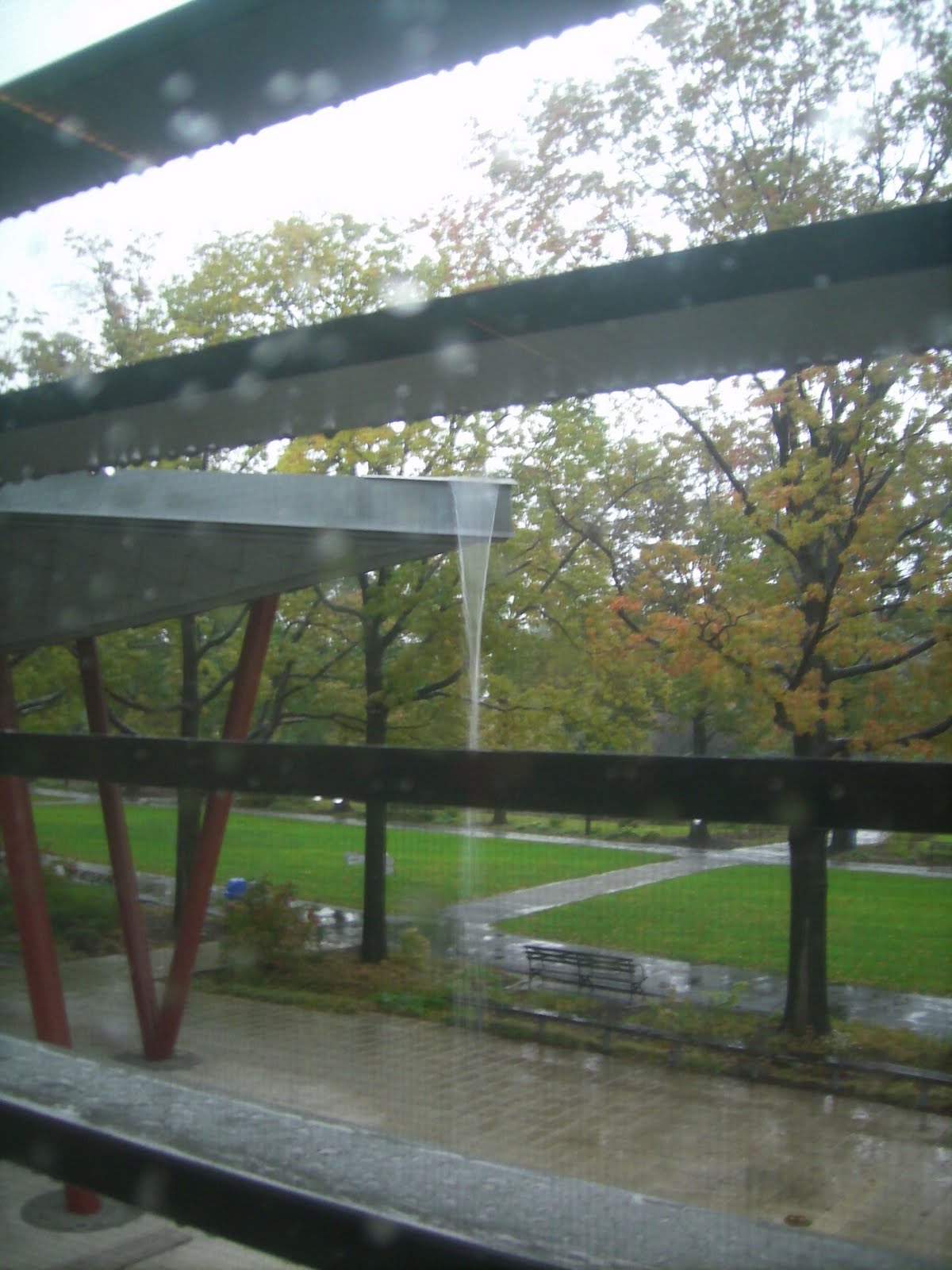 |
| Lucky that we had a Rainy Day so we can see how they Capture the Rainwater! |
 |
| A Handsome Group of People Just Trying to Save the Planet! |
AND...
CHECK OUT THIS LINK TO MY WEB ALBUM CONTAINING MORE PHOTOS FROM OUR SEMINAR FIELD TRIP TO THE QUEENS BOTANICAL GARDENS...
https://picasaweb.google.com/114817259749697586086/FITSIE1011FieldTripQBG?authkey=Gv1sRgCP-3jLOxhIuJ5gE
Monday, November 7, 2011
Celebration, Florida
I came across this info a few years back which talks of the evolution of Celebration from Walt Disney's own mind, and its interesting connection to EPCOT.
Here is Celebrations official website...
(Note the designers of some of Downtown Celebrations buildings!)
What the Mortgage Brokers say...
http://www.floridamortgageblogger.com/orange-county-mortgage/celebration-florida-mortgage/
Here are some photos of mine from the 4+ years my brother and his family spent living in Celebration...


Here is Celebrations official website...
(Note the designers of some of Downtown Celebrations buildings!)
What the Mortgage Brokers say...
http://www.floridamortgageblogger.com/orange-county-mortgage/celebration-florida-mortgage/
Here are some photos of mine from the 4+ years my brother and his family spent living in Celebration...
 |
| My Brother's First House in Celebration |
 | |
| The House on Indigo Drive decorated for Christmas |
 |
| On the Front Porch |
 |
| The Celebration Pumpkin Patch |
 |
| Downtown Celebration...They make it "Snow" at Christmas Time!" |


 |
| The Lake at Celebration |
 |
| Swimming in one of Celebration's MANY Pools |
MORE TO FOLLOW....
Sunday, November 6, 2011
Guernica / Michael Mehaffy and Nikos A. Salingaros: The Architect Has No Clothes
This is an interesting article that Nora sent me to look at with regards to my Term Paper...I thought it was cool enough to share...
Guernica / Michael Mehaffy and Nikos A. Salingaros: The Architect Has No Clothes
Guernica / Michael Mehaffy and Nikos A. Salingaros: The Architect Has No Clothes
Subscribe to:
Posts (Atom)